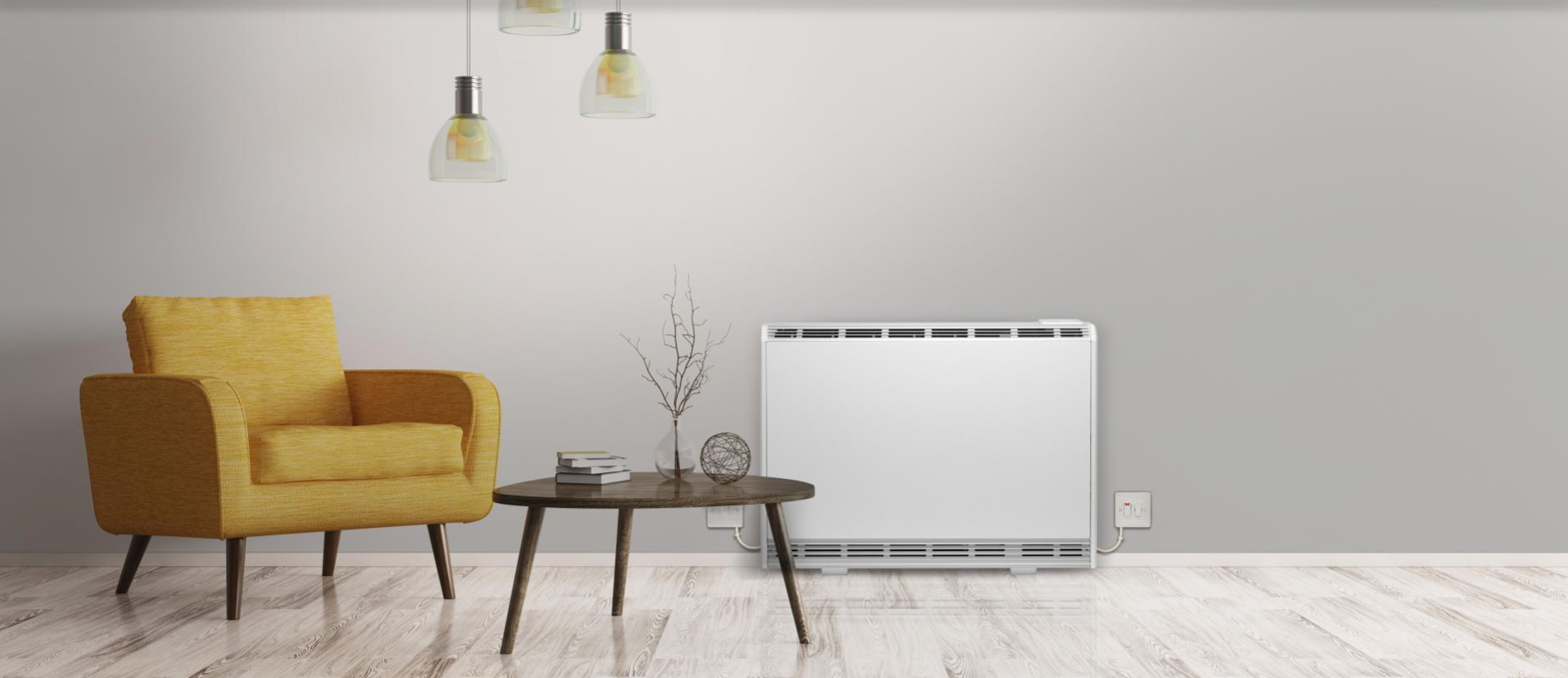
ELECTRIC STORAGE HEATERS
Electric storage heaters are a type of space heating system that store and release heat during the day or night, depending on the design. They are commonly used in homes and commercial buildings as a way to take advantage of off-peak electricity rates and provide a more cost-effective heating solution. Here’s how electric storage heaters typically work:
Heat Storage: Electric storage heaters contain a core made of a high-density material with good heat retention properties, such as clay, bricks, or a special type of concrete. This core is heated using electricity during off-peak hours when electricity rates are lower.
Off-Peak Charging: During off-peak hours, the storage heaters draw electricity from the grid to heat up the internal core. This can be controlled manually by the user or automatically through a built-in thermostat.
Heat Retention: Once the core is heated, it retains the warmth for an extended period. This stored heat is then gradually released into the room over the course of the day or night, providing a continuous and more energy-efficient heat source.
Thermostatic Control: Many electric storage heaters are equipped with built-in thermostats to regulate the temperature. Users can set the desired temperature, and the heater will adjust its operation to maintain the specified level of warmth.
User Control: Some modern electric storage heaters come with advanced features such as programmable timers and digital controls, allowing users to customize the heating schedule according to their preferences and daily routines.
Benefits of electric storage heaters include:
- Cost Efficiency: By taking advantage of off-peak electricity rates, users can save on energy costs compared to using electricity during peak hours.
- Consistent Heat: The stored heat provides a steady and consistent warmth throughout the day or night.
- Simple Installation: Electric storage heaters are relatively easy to install, especially compared to central heating systems.
However, there are also some drawbacks to consider:
- Lack of Instant Heat: Storage heaters might not provide instant heat when needed, as they rely on pre-heating during off-peak hours.
- Limited Control: Traditional storage heaters may offer limited control options, although modern models are improving in this regard.
- High Initial Cost: While operating costs can be lower, the initial purchase and installation of electric storage heaters may be relatively expensive.
It’s essential to consider the specific needs of your space and lifestyle when choosing a heating system, and consulting with a heating professional can help determine the most suitable solution for your requirements.